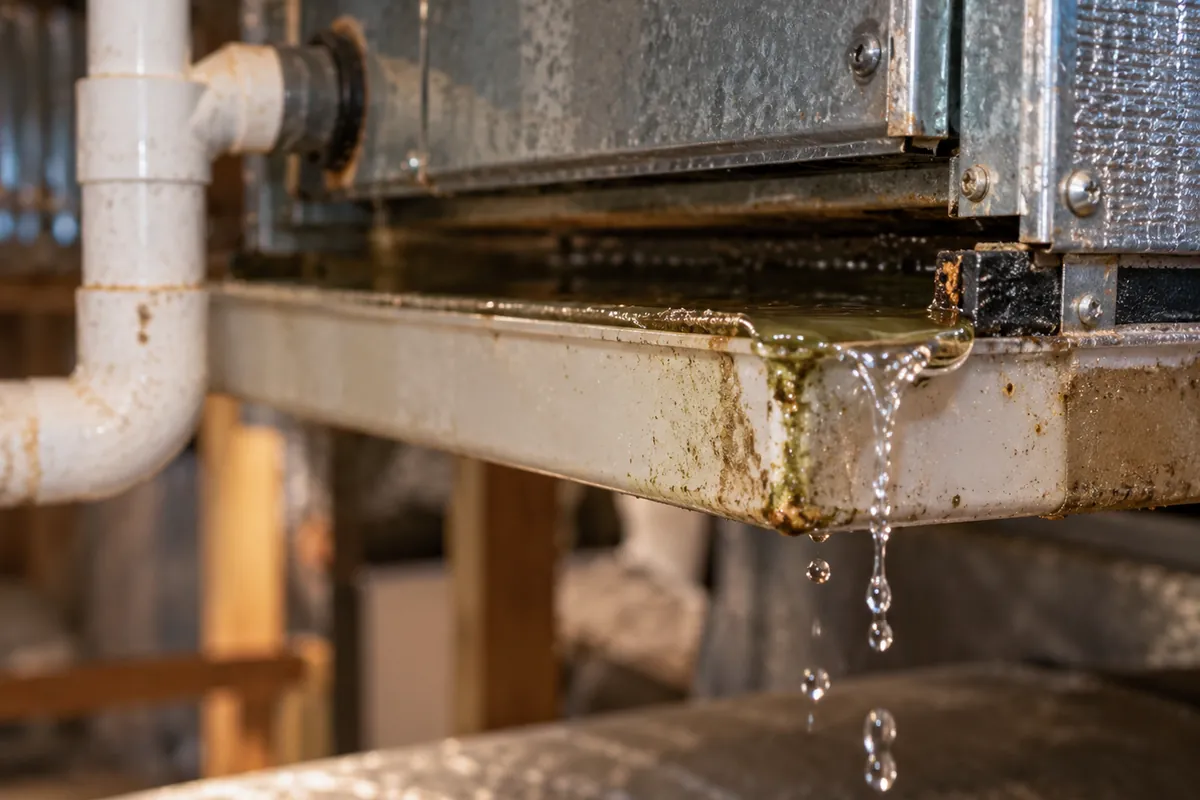
Buildings such as restaurants, offices, retail units and small industrial properties in Memphis, TN rely on commercial HVAC: rooftop units, split systems, and controls and maintenance programs for reliability. If you describe the building through Call Now, you will be connected with an independent HVAC contractor serving 59 ZIP codes around Memphis.
Common commercial equipment
- Economizers, controls and building automation interfaces
- Rooftop units (RTUs) in the 3 to 20 ton range
- Walk-in coolers and refrigeration in food businesses
- Make-up air and exhaust fans for kitchens
- Split systems and packaged units
What a commercial maintenance plan covers
- Filter changes on a schedule that fits the building use
- Coil cleaning, refrigerant checks and electrical tests
- Belt, bearing and motor checks on fans and blowers
- Economizer and control calibration
- Written reports for each unit
Planning around business hours
Rooftop and customer-area work goes more smoothly after hours. Before a visit is scheduled, give the provider your opening times, details of roof access, safety rules and any landlord approval that is needed.
Landlord and tenant responsibilities
Who maintains and replaces HVAC equipment differs from lease to lease. Read yours before authorizing work, and keep service records, since landlords and insurers often require them.
Questions to ask before approving a repair
- Will you give me the findings and the scope in writing before work starts?
- What are my options: repair now, repair and monitor, or replace?
- What does the repair warranty cover and for how long?
- How old is the system and which refrigerant does it use?
- What failed, how did you confirm it and can you show me the part or the reading?
How a commercial HVAC visit works, step by step
A diagnostic visit should follow a repeatable order so the technician finds the cause, not just the symptom. Knowing the order helps you tell a thorough visit from a part swap.
- Interview: what you noticed, when it started, how the system sounds and what you have already tried.
- Visual check: thermostat settings, filter, supply and return registers, the air handler, the condensate line and the outdoor unit.
- Electrical tests: breaker and disconnect, capacitor microfarad rating, contactor contacts, motor amperage and control voltage.
- Airflow and temperature: the temperature drop across the evaporator coil and, where needed, static pressure in the ductwork.
- Refrigerant checks: pressures, superheat and subcooling, and a leak search if the charge is low.
- A written finding: the cause, the repair options and what each one would fix, before any part is replaced.
What shapes the written scope
Two AC calls that sound alike can be very different jobs. The written scope should say what the technician found and which of these factors applied.
Have the provider show the diagnostic and the repair as separate items, and list any parts, labor or follow-up that are left out.
- Whether the ductwork, return air or thermostat contributes to the problem
- The age, tonnage and refrigerant type of the system
- Access to the air handler in the attic or closet and to the outdoor unit
- Whether the fault is an electrical part, an airflow problem, a refrigerant leak or a drainage problem
- Warranty status of the parts and whether the equipment is registered with the manufacturer
Mistakes that make AC problems worse
- Running a frozen system. Ice means airflow or refrigerant is wrong, and running it can damage the compressor.
- Putting off a small repair. A weak capacitor can take out a compressor if left alone.
- Adding refrigerant without finding the leak. The charge will drop again and the leak may grow.
- Ignoring a dirty filter. It is the most common cause of poor airflow and frozen coils.
- Setting the thermostat much lower to cool faster. An AC cools at a steady rate, so it only runs longer.
Safety and rules to know
Three hazards share one machine in an air conditioner: high-voltage electricity, pressurized refrigerant and moving parts. Opening electrical panels, bridging contactors and adding refrigerant are not jobs for homeowners, and capacitors can keep a charge after the power is off.
In the United States, anyone who buys or handles refrigerant must be certified under EPA Section 608, and refrigerant must be recovered and not vented. Ask the technician for their certification and check the contractor's licence with Tennessee Board for Licensing Contractors (HVAC classifications).
Prepare your Memphis home before the technician arrives
- Check that the outdoor disconnect and the breaker are on, but do not open electrical panels
- Write down the sounds, smells, leaks or ice you have noticed, and when
- Set the thermostat to cool and note what it shows and what the house temperature is
- Clear weeds, leaves and debris from around the outdoor unit
- Replace or check the filter, and clear furniture from the return grille and the air handler
HVAC terms explained
- Static pressure: a measure of airflow resistance in the ducts
- Contactor: the switch that sends power to the outdoor unit
- Capacitor: stores charge to start and run the compressor and fan motors
- Evaporator coil: the indoor coil where refrigerant absorbs heat from the air
- EPA Section 608: the certification required to handle refrigerants
- Superheat and subcooling: readings that show whether the refrigerant charge is correct
- Condenser coil: the outdoor coil where heat is released
- Condensate drain: the line that carries moisture out of the house
What makes commercial HVAC different in Memphis
Hot, humid Mid-South summers with heat indexes often above 100 degrees; winters can bring ice storms. Humidity drives condensate drain clogs, sweating ducts, and mold in air handlers.
Memphis Light, Gas and Water (MLGW) is the local utility. Older homes in Midtown, Cooper-Young, Binghampton, and Whitehaven; newer homes in Cordova, Collierville, Germantown, and Bartlett. The diagnosis and the equipment recommendation for your address can both be shaped by these local conditions, so ask the technician how.
Commercial HVAC across Memphis and nearby cities
59 ZIP codes in Memphis, Tennessee fall within the area of Air Conditioning Repair Memphis: 37501, 37544, 38101, 38103, 38104, 38105, 38106, 38107, 38108, 38109. Requests may also go to providers who serve Ellendale, Germantown, Cordova and Collierville. Coverage depends on the address, so state your ZIP code on the call.
An independent HVAC contractor is one call away: use Call Now at the top of any page and describe the symptoms and the age of the system. The contractor confirms your address, then examines the system in person to diagnose it.
Related help in Memphis
If this is not quite your situation, these pages cover the neighboring questions: Summer HVAC Checklist for Memphis; AC Maintenance and Tune-Up; How to Lower Cooling Bills; AC Making Noise: What Each Sound Means. The service area list shows every nearby city and ZIP code covered.
Commercial HVAC in Memphis: common questions
Do commercial systems need permits?
Replacements often do. The provider can explain local requirements.
What if the unit fails during business hours?
Call and describe the situation and ask about availability for urgent repairs.
Can a provider service rooftop units?
A lot of HVAC contractors do, but ask about roof access, safety and certifications.
How do I reduce commercial energy costs?
Keep filters clean, maintain coils and economizers, set schedules and repair duct and control faults.
What documents do I need for a service call?
Have the equipment's model and serial numbers to hand, along with lease terms and access arrangements.
How often should commercial HVAC be serviced?
Quarterly service is common, with more frequent filter changes in heavy-use spaces.